
Destructive Testing & Load-to-Failure Testing
Durham Lifting provides controlled destructive and load-to-failure testing for wire ropes, lifting equipment, fabricated structures, components and engineered assemblies at Britannia Test House in Middlesbrough. Destruction testing can be carried out up to 1143 tonnes on the Avery Horizontal Test Bed.
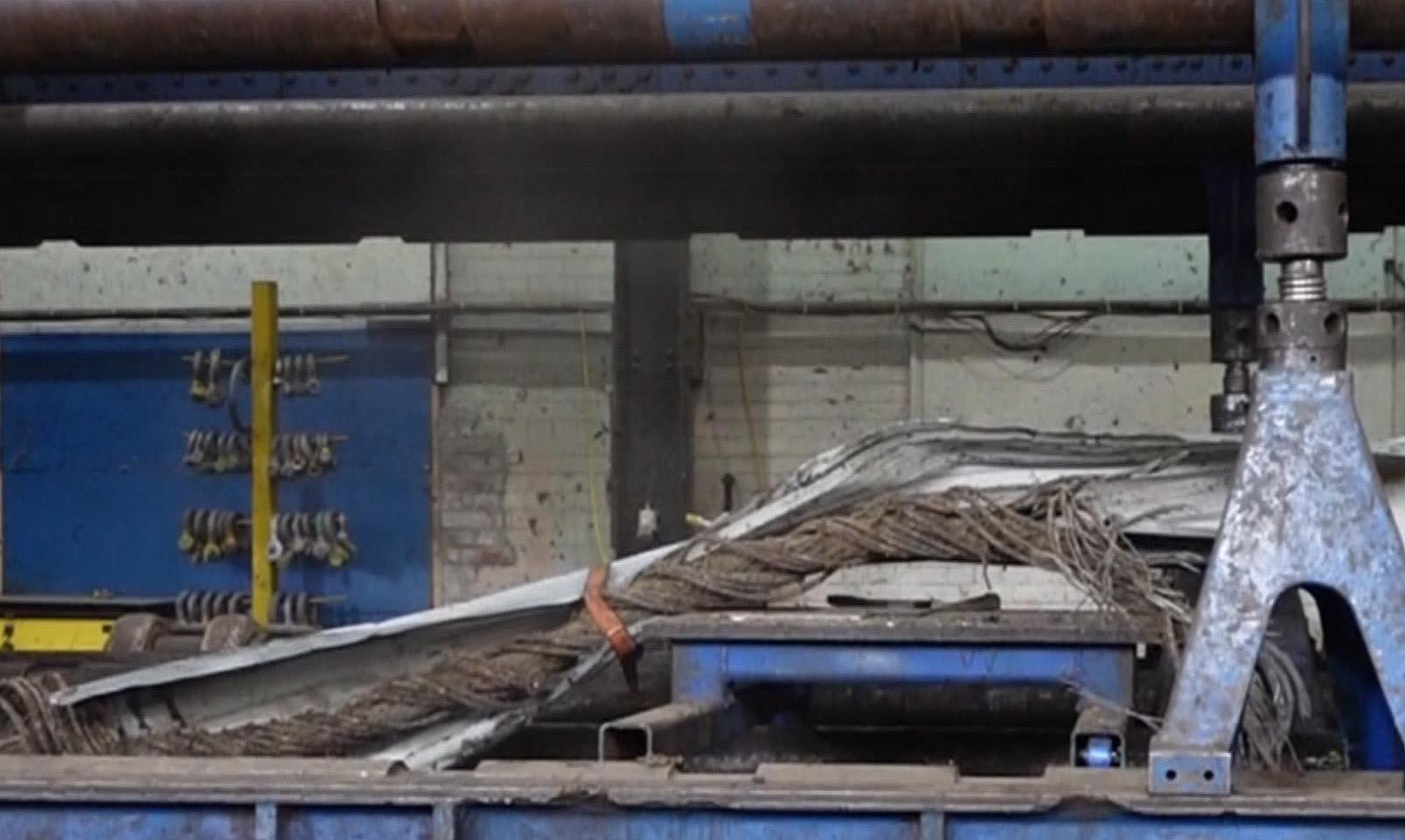
What is destructive testing?
Destructive testing intentionally takes an item beyond normal working or proof load conditions so its break load, deformation and failure behaviour can be measured under controlled loading.
Unlike proof load testing, which verifies performance at a specified test load, destructive testing is used where the objective is to understand ultimate capacity, break load, deformation behaviour or the point of failure.
Destructive testing for wire ropes, lifting equipment and engineered structures
Durham Lifting supports controlled destructive testing where the objective is to establish break load, failure behaviour, ultimate capacity or performance beyond normal service conditions. Two horizontal test beds provide verified destruction-testing capability for different load ranges.
Avery Horizontal Test Bed: working loads of 1250Te in tension and 1200Te in compression, with destruction tests up to 1143 tonnes.
500Te Horizontal Test Bed: working load of 500Te in tension, with destruction tests up to 110 tonnes.
The appropriate test bed and arrangement depend on the item geometry, expected break load, connection method and test objective. View a 103mm wire rope destruction test →
Frequently asked questions
Common questions about destructive testing, load to failure testing, test capability, engineered arrangements and reporting.
What is destructive testing?
Destructive testing involves applying load beyond normal service or proof load conditions to understand ultimate capacity, failure behaviour, deformation and break load characteristics.
Why is destructive testing carried out?
Destructive testing can help validate designs, understand failure modes, confirm ultimate strength, support product development or provide engineering data for critical lifting and structural applications.
What destructive testing capacity is available at Britannia Test House?
Durham Lifting has two horizontal test beds with verified destruction-testing capability. The Avery Horizontal Test Bed can carry out destruction tests up to 1143 tonnes, while the 500Te Horizontal Test Bed can carry out destruction tests up to 110 tonnes. The correct arrangement depends on the item, expected break load and connection geometry.
What types of equipment can be destructively tested?
Durham Lifting supports destructive testing for wire ropes, lifting equipment, fabricated structures, welded assemblies, lifting lugs, offshore equipment, rigging assemblies and bespoke engineered components.
What is the difference between destructive testing and proof load testing?
Proof load testing verifies that an item can withstand a specified test load without intentionally taking it to failure. Destructive testing is used when the purpose is to establish break load, ultimate capacity, deformation behaviour or failure characteristics.
Can destructive testing be witnessed by a third party?
Yes. Testing can be witnessed by clients, surveyors, insurers or third-party verification bodies where required by the project specification.
Do you provide test reports and data?
Yes. Test reports, recorded load data, observations and supporting documentation can be provided following completion of the destructive test programme.
Can bespoke testing arrangements be designed?
Yes. Many destructive testing projects require bespoke support structures, hydraulic systems, reaction frames or engineered load application arrangements designed specifically for the item being tested.
Where is destructive testing carried out?
Destructive testing is carried out at Britannia Test House in Middlesbrough. Verified destruction-testing capability is available on the Avery Horizontal Test Bed and the 500Te Horizontal Test Bed.
What information is required for a destructive testing enquiry?
Drawings, dimensions, photographs, expected break load, material information, testing objectives and any certification requirements are all useful when reviewing a destructive testing enquiry.