
LOLER inspectionsThorough examination of lifting equipment & accessories
UK lifting equipment inspections and LOLER Thorough Examinations for cranes, hoists, lifting beams, slings, shackles and other lifting equipment, carried out by competent engineers with clear written reports.
Thorough examination is a legal inspection — not simply another service visit.
LOLER — the Lifting Operations and Lifting Equipment Regulations 1998 — places duties on businesses that own, operate or control lifting equipment used at work. Where the regulations require a Thorough Examination, it must be carried out by a competent person and followed by a written report.
A Thorough Examination is a systematic and detailed assessment of the equipment and safety-critical parts, intended to identify defects or deterioration that could affect safe continued use. The scope depends on the equipment, its condition, how it is used and the professional judgement of the competent person.
Durham Lifting supports industrial customers with LOLER inspections across lifting machinery, below-the-hook equipment and lifting accessories, with managed inspection scheduling available for sites handling larger equipment registers.
Lifting equipment and accessories we can examine.
LOLER applies to lifting equipment used at work and, where applicable, the accessories used for lifting. Durham Lifting’s existing service covers a broad range of industrial lifting equipment.
Lifting Machinery
- Overhead cranes
- Gantry cranes
- Jib cranes
- Monorail systems
- Electric and pneumatic hoists
- Chain blocks
Lifting Devices
- Lifting beams
- Spreader beams
- Lifting frames
- C-Hooks
- Forklift attachments used for lifting
- Vacuum lifters and bespoke lifting devices
Lifting Accessories
- Chain slings
- Wire rope slings
- Webbing and round slings
- Shackles
- Eyebolts and lifting points
- Other loose lifting tackle
How often is a LOLER Thorough Examination required?
LOLER sets default examination intervals for equipment in service, unless a competent person has drawn up an examination scheme specifying an appropriate alternative interval.
Lifting accessories
Lifting accessories such as slings, shackles and other accessories are normally thoroughly examined every six months unless an examination scheme specifies otherwise.
Equipment lifting people
Lifting equipment and associated accessories used to lift people are normally subject to a six-month interval unless covered by a suitable examination scheme.
Other lifting equipment
Other lifting equipment is normally thoroughly examined every twelve months unless a competent person specifies a different interval through an examination scheme.
Intervals can be tailored where a competent person specifies a suitable scheme.
Equipment condition, use, operating environment and risk can all influence the examination interval. The statutory six- and twelve-month periods are therefore not the only possible route.
- Equipment register and asset identification
- Previous Thorough Examination reports
- How and where the equipment is used
- Known defects, repairs or modifications
- Whether equipment is used to lift people
- Any existing examination scheme
Three related activities — three different purposes.
Searches for “LOLER testing” are common, but the legal requirement is a Thorough Examination. Routine servicing and proof/load testing are separate activities and should not be treated as substitutes for the examination.
Thorough Examination
A systematic and detailed examination by a competent person, followed by the required written report and defect information.
Request an inspection →Servicing & Maintenance
Routine maintenance keeps work equipment in a safe state and working order. For cranes and hoists, servicing remains a separate lifecycle activity.
View crane servicing →Proof & Load Testing
Most lifting equipment does not need routine load testing as part of every Thorough Examination. Where testing is considered necessary, the need and method should be determined appropriately for the equipment and risk.
View testing services →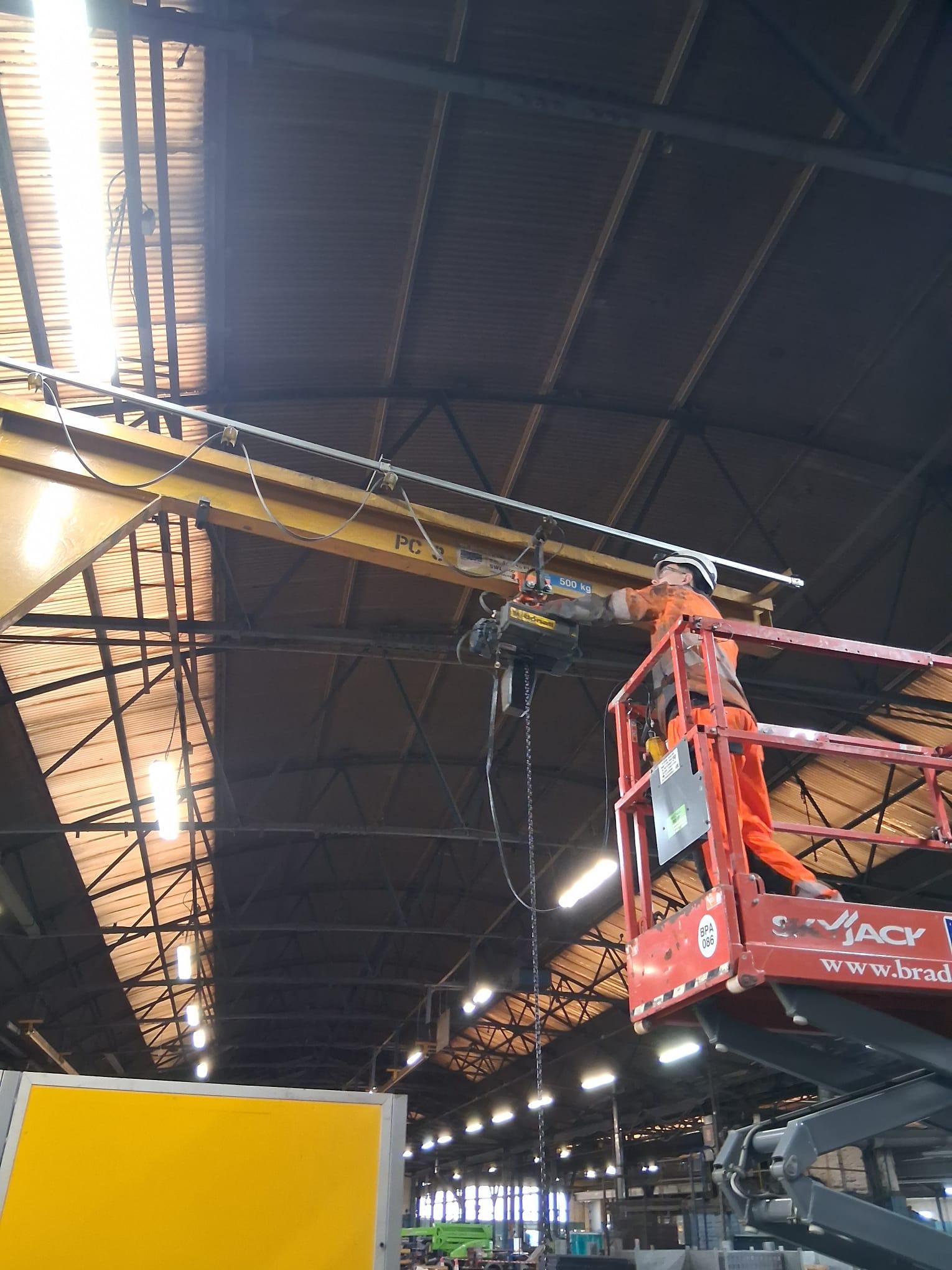
LOLER and PUWER can both apply to lifting equipment.
LOLER adds specific duties for lifting equipment and lifting operations. PUWER applies more broadly to work equipment, including requirements around suitability, maintenance and inspection where necessary.
Keeping these routes separate on the website gives customers a clearer starting point: use this page for LOLER Thorough Examination of lifting equipment, and the PUWER page for broader work-equipment inspection requirements.
View PUWER InspectionsFrom equipment register to written report.
The precise scope is determined by the competent person and the equipment being examined, but the customer journey should remain clear from initial planning through to documented findings.
Scope
Identify the equipment, location, previous reports and examination requirement.
Examine
Carry out the systematic and detailed Thorough Examination appropriate to the equipment.
Assess
Review defects, deterioration and safety-critical findings affecting continued use.
Report
Issue the written report with the information required for the Thorough Examination.
Action
Where defects are identified, communicate the findings and the action required by the report.
Schedule
Record the next examination date or continue under the applicable examination scheme.
A Thorough Examination ends with a written report.
The report records the examination and relevant findings, including defects that are or could become dangerous and the date by which the next Thorough Examination is due.
Where a serious defect creates an immediate danger, LOLER includes specific reporting duties. The appropriate action depends on the defect and the competent person’s findings.
Discuss Your Inspection RequirementManaging a large lifting-equipment register?
Durham Lifting can build scheduled Thorough Examinations into a managed Service Level Agreement, helping customers coordinate inspection dates, maintain records and reduce the risk of overdue examinations while keeping servicing and statutory examination clearly separated.
Discuss an Inspection ProgrammeKeep each requirement on the right service route.
LOLER inspection questions answered.
What is a LOLER inspection?
“LOLER inspection” is commonly used to describe the statutory Thorough Examination required for lifting equipment under the Lifting Operations and Lifting Equipment Regulations 1998. The examination is systematic and detailed and must be carried out by a competent person.
How often should lifting equipment be thoroughly examined?
Unless an examination scheme specifies otherwise, lifting accessories and equipment used to lift people are normally examined every six months, while other lifting equipment is normally examined every twelve months.
Is LOLER testing the same as a Thorough Examination?
No. The legal requirement is a Thorough Examination. HSE guidance states that most lifting equipment does not need routine testing as part of every Thorough Examination. Where testing is considered necessary, the need and method should be determined appropriately for the equipment and risk.
Is a LOLER Thorough Examination the same as servicing?
No. Maintenance keeps equipment in a safe condition and working order, while a Thorough Examination is a separate statutory examination intended to identify defects affecting safe continued use.
Who can carry out a LOLER Thorough Examination?
It must be carried out by a competent person with appropriate practical and theoretical knowledge and experience of the lifting equipment, and sufficient independence and impartiality to make objective decisions.
What equipment can Durham Lifting examine?
The existing service covers cranes, hoists, lifting beams and frames, lifting accessories such as slings and shackles, and other industrial lifting equipment listed on this page.
What happens if a serious defect is found?
The report identifies the defect and the action required. Where a defect is considered to present an immediate danger, LOLER also requires specific notification and reporting steps.
Can LOLER inspections be managed across several sites?
Yes. Durham Lifting’s existing Service Level Agreement support can be used to help coordinate examination schedules, records and recurring inspection requirements across larger equipment registers.
Need a LOLER inspection or lifting equipment Thorough Examination?
Send your equipment list, site details and previous examination information if available. Durham Lifting can review the requirement and arrange the appropriate next step.